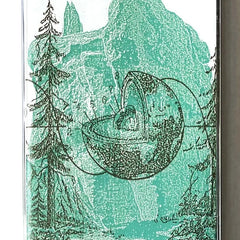


Christina Kubisch // TUNING LP
- Availability:
ドイツの実験音楽家Christina Kubischが、2026年4月にベルリンの実験レーベルFaiticheからリリースしたレコードです。
電磁波マイクを用いた物音ドローン3曲を収録。DLコード付属。
前作もオススメです。
以下、レーベルによる解説です。
"Faiticheは、新たなアーティストを迎えることを大変嬉しく思う。Christina Kubischは、サウンドアーティストの第一世代に属する。彼女の活動は、パフォーマンスやコンサートから、ビデオや視覚芸術を組み合わせた作品まで多岐にわたるが、最もよく知られているのはサウンド・インスタレーションと電気音響作品だ。
『TUNING』は、Christina Kubischの創作活動の異なる時期に制作された3つの作品を収録している。これらに共通するのは、もともと「音楽ではない」と見なされていた音響現象を、どのようにして作曲へと昇華させているかという点だ。"
以下、Jan Jelinekとのインタビューです。
"Jan Jelinek:『Gaming in Silence』(2024年)は、このコンピレーションに収録された最新作です。これは、電磁波、声、そして抽象的な音のテクスチャーを組み合わせたコラージュ作品です。この組み合わせはどのようにして生まれたのでしょうか?
Christina Kubisch:『Gaming』は、カールスルーエのZKMにある「サウンド・ドーム」向けの固定メディア作品として委嘱されました。『Resonances: The Electromagnetic Bodies Project』(2005年)以来、私はZKMの旧・新サーバー室や、同館が所蔵する歴史的なコンピュータゲームの常設コレクションで録音を行ってきました。『アステロイド』(アタリ、1979年)や『ポリ・プレイ』(VEBポリテクニック、1986年)といったコンピュータゲームには、特別に生成されたアナログ電磁波が含まれており、その密度、リズム、テクスチャーに特に興味を惹かれています。私はもともと絵画を学んでおり、作曲という作業は、しばしば抽象画を描くような感覚に似ています。素材への手を加えるのは最小限に抑え、独特のサウンド・スペースが浮かび上がるまで、層を重ね、重なり合わせます。最近の作品では、磁気波とフィールド・レコーディングや生楽器を組み合わせることもあります。『Gaming』では、沈黙をテーマにした中国の歌を私が録音したものを用いています。
JJ:『Two persons walking through a street in Madrid』(2004年)は、あなたの『Electrical Walks』シリーズからの録音ですね。ここで、あなたの最も有名な作品の一つについて簡単に説明しておきましょう。「エレクトリカル・ウォーク」の参加者は、周囲の電磁波――例えばセキュリティゲートやATM、ネオンサインなどから発せられる電磁波――を受信できる特殊なヘッドホンを装着し、公共空間を移動します。参加者は、通常は人間の耳には聞こえない状況を体験し、自身の動きを演出することで、その状況を能動的に形作ることができます。この作品を私は心から称賛しています。とりわけ、参加者とアーティストの間に明確な境界線がない点が素晴らしいと思います。『マドリードの街を歩く二人』(2004年)では、具体的にどのような音が聞こえるのでしょうか?
CK:この初期の作品では、同じ場所でありながら異なる動きをする「エレクトリカル・ウォーク」の参加者が、それぞれ何を聞いているのかを理解したいと考えました。スペインの作曲家ミゲル・アルバレス=フェルナンデス氏と私は、マドリードの主要なショッピングストリートの両端から出発し、途中で少しの間合流した後、それぞれの目的地まで歩き続けました。私たちはそれぞれ自分の歩行音を録音し、それを重ね合わせました。これは「電磁気的概念主義」の作品と呼べるかもしれません。
JJ:『Diapason(2009年版)』は、15本の音叉の音に基づいた楽曲を再生するインスタレーションです。この設定は録音からも聴き取れます。劇的な展開も、始まりも終わりもありません。その代わりに、減衰段階に焦点を当てたアレアトリー音楽を彷彿とさせます。この作品を制作するに至った経緯と、作曲手法についてお聞かせいただけますか?
CK:『ディアパソン』は、「非楽器」、あるいはもはや存在しない楽器を題材とした3部作の一部です。地下の作業員に信号を送るために使われていた電気式鉱山ベル、もともと医療目的で使用されていた歴史的なガラスハーモニカ、そして医師が人々の聴力を検査するために使用していた音叉などがそれにあたります。これらすべての方法は、もはや使用されていません。耳に近づけて初めて聞こえる音叉の音は、ベルリン工科大学の電子スタジオで、その減衰音までもが聞き取れるように録音されました。周波数は64から2048ヘルツの範囲にあり、小さな可動式おもりを使って微細な音程単位で調整することができます。音の順序や間奏の長さは偶然に委ねられており、あらかじめ決められたものではありませんでした。2009年版は、ベルゲンの歴史ある聖十字架教会(Korskirken)でのインスタレーションのために制作されました。来場者はいつでも会場に出入りすることができ、後陣の床に設置された一連の小型スピーカーから再生される音を、どこで、どのくらいの時間聴くかを自分で決めることができました。"
レーベルその他作品はこちら /// Click here to see more Faitiche releases available at Tobira.
----------------------------------------------
Includes DL code.
12" black vinyl.
Edition of 300 copies.
Tracklist:
1. Gaming in silence (2024) 09:44
2. Two persons walking through a street in Madrid (2004) 11:38
3. Diapason (version 2009) 18:54
Text/interview from the label:
"Faitiche is delighted to welcome a new artist: Christina Kubisch belongs to the first generation of sound artists. Her practice ranges from performances, concerts, to works with video and visual art, but she is best known for her sound installations and electro-acoustic compositions.
TUNING brings together three pieces by Christina Kubisch from different periods of her oeuvre. What they have in common is the way they transform sound phenomena originally considered “non-music” into compositions.
Christina Kubisch: Gaming was commissioned as a fixed-media composition for the Sound Dome at ZKM Karlsruhe. Since Resonances: The Electromagnetic Bodies Project (2005), I’ve been making recordings in the old and new server rooms at the ZKM and in their permanent collection of historical computer games. Computer games like Asteroids (Atari, 1979) and Poly-Play (VEB Polytechnik, 1986) have specially generated analogue electromagnetic waves that interest me in particular on account of their density, rhythms and textures. I originally studied painting and to me the work of composition often feels like painting an abstract picture. I alter my source material as little as possible, layering and overlapping until a distinctive sound space emerges. In recent pieces, I sometimes combine magnetic waves with field recordings or live instruments. In Gaming it’s my recording of a Chinese song about silence.
JJ: Two persons walking through a street in Madrid (2004) is a recording from your Electrical Walks series. Here we should give a brief explanation of one of your best known works: participants in an Electrical Walk move through public spaces wearing prepared headphones that allow them to receive electromagnetic waves from their surroundings – for example from security gates, ATMs or neon signs. They discover a situation that normally is inaudible to the human ear and they can actively shape it by choreographing their movements. I really admire this piece, not least because there’s no clear dividing line between participants and artist. What exactly do we hear in Two persons walking through a street in Madrid (2004)?
CK: With this early work, I wanted to understand what is heard by people participating in an Electrical Walk in the same place but moving in different ways. The Spanish composer Miguel Alvarez-Fernàndez and I set off from opposite ends of a major shopping street in Madrid, met briefly in the middle, and then continued to the end. We both recorded our walks and I then layered them over one another. You might call it a work of electromagnetic conceptualism.
JJ: Diapason (2009 version) is an installation that plays a composition based on sounds from fifteen tuning forks. This setting is audible in the recording: there’s no dramatic arc, no beginning or end – instead, it recalls a piece of aleatoric music focussing on the decay phase. How did you come to make this work and could you tell us something about your compositional method?
CK: Diapason is part of a series of three pieces that deal with “non-instruments” or instruments that no longer exist: electrical mine bells used to send signals to the workers underground; a historical glass harmonica originally used for medicinal purposes; and tuning forks that were used by doctors to test people’s hearing. All of these methods are no longer in use. The sound of the tuning forks, audible only if held close to the ear, was recorded at the electronic studio at Berlin’s Technical University in such a way that even their decay remained audible. The frequencies range between 64 and 2048 Hertz and they can be adjusted at micro-intervals using small movable weights. The sequence and the duration of the pauses are dictated by chance and were not defined in advance. The 2009 version was created for an installation in the historic Holy Cross Church (Korskirken) in Bergen. Visitors could enter and leave the space at any time, deciding for themselves where and for how long they wished to listen to the sounds played back over an array of small loudspeakers placed on the floor of the apse."
Artist : Christina Kubisch
Label : Faitiche
cat no : fait-41LP
Release date : 17th April 2026
ドイツの実験音楽家Christina Kubischが、2026年4月にベルリンの実験レーベルFaiticheからリリースしたレコードです。
電磁波マイクを用いた物音ドローン3曲を収録。DLコード付属。
前作もオススメです。
以下、レーベルによる解説です。
"Faiticheは、新たなアーティストを迎えることを大変嬉しく思う。Christina Kubischは、サウンドアーティストの第一世代に属する。彼女の活動は、パフォーマンスやコンサートから、ビデオや視覚芸術を組み合わせた作品まで多岐にわたるが、最もよく知られているのはサウンド・インスタレーションと電気音響作品だ。
『TUNING』は、Christina Kubischの創作活動の異なる時期に制作された3つの作品を収録している。これらに共通するのは、もともと「音楽ではない」と見なされていた音響現象を、どのようにして作曲へと昇華させているかという点だ。"
以下、Jan Jelinekとのインタビューです。
"Jan Jelinek:『Gaming in Silence』(2024年)は、このコンピレーションに収録された最新作です。これは、電磁波、声、そして抽象的な音のテクスチャーを組み合わせたコラージュ作品です。この組み合わせはどのようにして生まれたのでしょうか?
Christina Kubisch:『Gaming』は、カールスルーエのZKMにある「サウンド・ドーム」向けの固定メディア作品として委嘱されました。『Resonances: The Electromagnetic Bodies Project』(2005年)以来、私はZKMの旧・新サーバー室や、同館が所蔵する歴史的なコンピュータゲームの常設コレクションで録音を行ってきました。『アステロイド』(アタリ、1979年)や『ポリ・プレイ』(VEBポリテクニック、1986年)といったコンピュータゲームには、特別に生成されたアナログ電磁波が含まれており、その密度、リズム、テクスチャーに特に興味を惹かれています。私はもともと絵画を学んでおり、作曲という作業は、しばしば抽象画を描くような感覚に似ています。素材への手を加えるのは最小限に抑え、独特のサウンド・スペースが浮かび上がるまで、層を重ね、重なり合わせます。最近の作品では、磁気波とフィールド・レコーディングや生楽器を組み合わせることもあります。『Gaming』では、沈黙をテーマにした中国の歌を私が録音したものを用いています。
JJ:『Two persons walking through a street in Madrid』(2004年)は、あなたの『Electrical Walks』シリーズからの録音ですね。ここで、あなたの最も有名な作品の一つについて簡単に説明しておきましょう。「エレクトリカル・ウォーク」の参加者は、周囲の電磁波――例えばセキュリティゲートやATM、ネオンサインなどから発せられる電磁波――を受信できる特殊なヘッドホンを装着し、公共空間を移動します。参加者は、通常は人間の耳には聞こえない状況を体験し、自身の動きを演出することで、その状況を能動的に形作ることができます。この作品を私は心から称賛しています。とりわけ、参加者とアーティストの間に明確な境界線がない点が素晴らしいと思います。『マドリードの街を歩く二人』(2004年)では、具体的にどのような音が聞こえるのでしょうか?
CK:この初期の作品では、同じ場所でありながら異なる動きをする「エレクトリカル・ウォーク」の参加者が、それぞれ何を聞いているのかを理解したいと考えました。スペインの作曲家ミゲル・アルバレス=フェルナンデス氏と私は、マドリードの主要なショッピングストリートの両端から出発し、途中で少しの間合流した後、それぞれの目的地まで歩き続けました。私たちはそれぞれ自分の歩行音を録音し、それを重ね合わせました。これは「電磁気的概念主義」の作品と呼べるかもしれません。
JJ:『Diapason(2009年版)』は、15本の音叉の音に基づいた楽曲を再生するインスタレーションです。この設定は録音からも聴き取れます。劇的な展開も、始まりも終わりもありません。その代わりに、減衰段階に焦点を当てたアレアトリー音楽を彷彿とさせます。この作品を制作するに至った経緯と、作曲手法についてお聞かせいただけますか?
CK:『ディアパソン』は、「非楽器」、あるいはもはや存在しない楽器を題材とした3部作の一部です。地下の作業員に信号を送るために使われていた電気式鉱山ベル、もともと医療目的で使用されていた歴史的なガラスハーモニカ、そして医師が人々の聴力を検査するために使用していた音叉などがそれにあたります。これらすべての方法は、もはや使用されていません。耳に近づけて初めて聞こえる音叉の音は、ベルリン工科大学の電子スタジオで、その減衰音までもが聞き取れるように録音されました。周波数は64から2048ヘルツの範囲にあり、小さな可動式おもりを使って微細な音程単位で調整することができます。音の順序や間奏の長さは偶然に委ねられており、あらかじめ決められたものではありませんでした。2009年版は、ベルゲンの歴史ある聖十字架教会(Korskirken)でのインスタレーションのために制作されました。来場者はいつでも会場に出入りすることができ、後陣の床に設置された一連の小型スピーカーから再生される音を、どこで、どのくらいの時間聴くかを自分で決めることができました。"
レーベルその他作品はこちら /// Click here to see more Faitiche releases available at Tobira.
----------------------------------------------
Includes DL code.
12" black vinyl.
Edition of 300 copies.
Tracklist:
1. Gaming in silence (2024) 09:44
2. Two persons walking through a street in Madrid (2004) 11:38
3. Diapason (version 2009) 18:54
Text/interview from the label:
"Faitiche is delighted to welcome a new artist: Christina Kubisch belongs to the first generation of sound artists. Her practice ranges from performances, concerts, to works with video and visual art, but she is best known for her sound installations and electro-acoustic compositions.
TUNING brings together three pieces by Christina Kubisch from different periods of her oeuvre. What they have in common is the way they transform sound phenomena originally considered “non-music” into compositions.
Christina Kubisch: Gaming was commissioned as a fixed-media composition for the Sound Dome at ZKM Karlsruhe. Since Resonances: The Electromagnetic Bodies Project (2005), I’ve been making recordings in the old and new server rooms at the ZKM and in their permanent collection of historical computer games. Computer games like Asteroids (Atari, 1979) and Poly-Play (VEB Polytechnik, 1986) have specially generated analogue electromagnetic waves that interest me in particular on account of their density, rhythms and textures. I originally studied painting and to me the work of composition often feels like painting an abstract picture. I alter my source material as little as possible, layering and overlapping until a distinctive sound space emerges. In recent pieces, I sometimes combine magnetic waves with field recordings or live instruments. In Gaming it’s my recording of a Chinese song about silence.
JJ: Two persons walking through a street in Madrid (2004) is a recording from your Electrical Walks series. Here we should give a brief explanation of one of your best known works: participants in an Electrical Walk move through public spaces wearing prepared headphones that allow them to receive electromagnetic waves from their surroundings – for example from security gates, ATMs or neon signs. They discover a situation that normally is inaudible to the human ear and they can actively shape it by choreographing their movements. I really admire this piece, not least because there’s no clear dividing line between participants and artist. What exactly do we hear in Two persons walking through a street in Madrid (2004)?
CK: With this early work, I wanted to understand what is heard by people participating in an Electrical Walk in the same place but moving in different ways. The Spanish composer Miguel Alvarez-Fernàndez and I set off from opposite ends of a major shopping street in Madrid, met briefly in the middle, and then continued to the end. We both recorded our walks and I then layered them over one another. You might call it a work of electromagnetic conceptualism.
JJ: Diapason (2009 version) is an installation that plays a composition based on sounds from fifteen tuning forks. This setting is audible in the recording: there’s no dramatic arc, no beginning or end – instead, it recalls a piece of aleatoric music focussing on the decay phase. How did you come to make this work and could you tell us something about your compositional method?
CK: Diapason is part of a series of three pieces that deal with “non-instruments” or instruments that no longer exist: electrical mine bells used to send signals to the workers underground; a historical glass harmonica originally used for medicinal purposes; and tuning forks that were used by doctors to test people’s hearing. All of these methods are no longer in use. The sound of the tuning forks, audible only if held close to the ear, was recorded at the electronic studio at Berlin’s Technical University in such a way that even their decay remained audible. The frequencies range between 64 and 2048 Hertz and they can be adjusted at micro-intervals using small movable weights. The sequence and the duration of the pauses are dictated by chance and were not defined in advance. The 2009 version was created for an installation in the historic Holy Cross Church (Korskirken) in Bergen. Visitors could enter and leave the space at any time, deciding for themselves where and for how long they wished to listen to the sounds played back over an array of small loudspeakers placed on the floor of the apse."
Artist : Christina Kubisch
Label : Faitiche
cat no : fait-41LP
Release date : 17th April 2026
Related Products